When is the Best Time to Visit Australia?
Discover the best time to go to Australia to soak up its culture, pristine nature, first-class vineyards, and laid-back surf spots.
- Bespoke Australia holidays during the best time of year
- Weather insights from award-winning travel specialists
- Unique experiences for each season
- 24/7 support all year
People always ask us when is the best time to visit Australia. The truth is, there is no bad time to go, but depending on what you wish to see, certain months are better than others. Typically, Australia’s summer is the most popular time to travel, which peaks over the Christmas period in December and January. This is especially true for Tasmania, Queensland, and New South Wales. However, the Northern Territory is best between May and October when it is notably drier and brighter, while South Australia, Victoria, and Western Australia are beautiful in spring (September – November) and autumn (March – May) and less crowded.
Monthly Climate Guide for Australia
, Australia
Average temperatures (Celsius) and rainfall (mm)
The climate in Australia varies due to its vast size and diverse landscape. In the north, expect a tropical climate with distinct wet and dry seasons. During the dry season (May to October), temperatures are high (30°C) and rainfall minimal, while the wet season (November to April) brings heavy rainfall and high humidity.
The south, including states like Victoria and New South Wales, has a milder climate with four distinct seasons, giving you more flexibility when choosing the best time to visit Australia. Summer (December to February) brings hot temperatures, which can reach up to 40°C, while winter (June to August) sees cooler weather and some rainfall. The in-between seasons are warm and generally dry too. As you go further north, on the east and west coast, you’ll find a more tropical climate, while the southern parts have weather like the Mediterranean; hot summers (30°C-40°C) and cooler winters, with some rain.
The hottest months in Australia are usually between December and February when temperatures peak at about 40°C.
Seasonal Guide for Visiting Australia
The summer months of December to February bring hot weather to the southern half of Australia. However, our favourite seasons to visit this part of the country are autumn and spring when it’s typically less busy and offers a more temperate climate. For animal fanatics, we’d recommend travelling Down Under between September and November, as the wildlife is more active; whereas March to May is when wineries are busy grape harvesting.
-

September, October, November
Spring in Australia is a blooming period of warmth and renewal, making it an excellent time for nature walks and observing the country's famed wildflower displays. Weather conditions are generally mild, which is ideal for outdoor pursuits and visiting national parks to see the wildlife become more active. The special events of spring include the Floriade in Canberra, where millions of flowers bloom in a spectacular display of color and beauty, attracting visitors nationally and internationally.
Spring is also one of the best times to visit east coast Australia, where you’ve got your pick of coastal paradises. Some of the world’s most beautiful examples of ocean life are found in the Great Barrier Reef and the Whitsunday Islands in Queensland. Both destinations are fantastic for a family vacation in Australia.
Melbourne in spring is equally brilliant. While the sun is shining, take in the city’s art galleries and stylish boutiques by bike or go on a day trip to the Yarra Valley for wine tasting and lunch among the rolling vines. Back in the city, look out for the Melbourne Spring Racing Carnival, which takes place between October and November and includes the famous Melbourne Cup, a four-day event of thrilling horse races and glamorous fashion. If you’re looking for a road trip, spring is one of the best seasons in Australia to drive the Great Ocean Road, when waterfalls are full, flowers are blooming, and the vistas are out of this world.
-
December, January, February
Summer in Australia occurs from December to February. This is the hottest time of the year, with temperatures hovering around 84°F in many parts of the country, perfect for beach lovers and enthusiasts of outdoor festivals. During this season, expect bustling coastal areas, with Australian weather in December kickstarting the peak tourist season across most beach destinations. The Sydney to Hobart Yacht Race and the Australian Open Tennis are among the special events unique to the Australian summer, offering thrilling spectacles for sports fans.
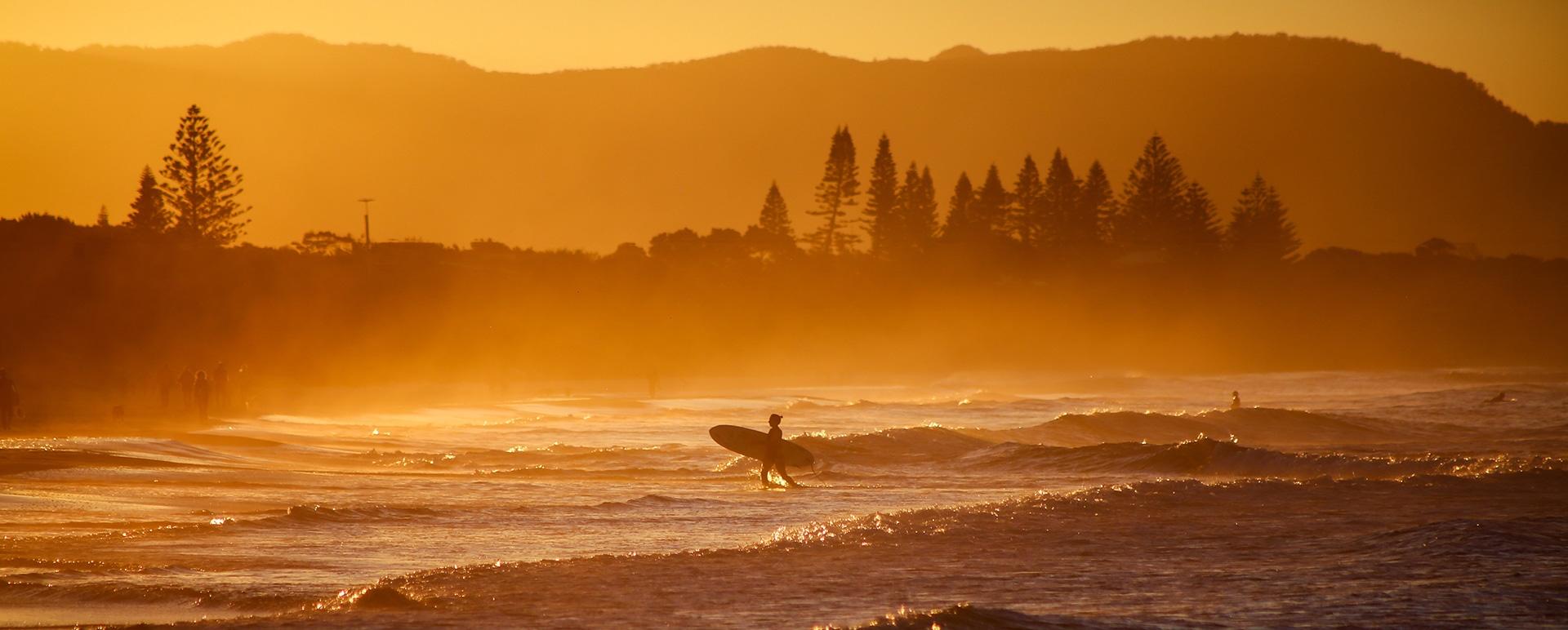
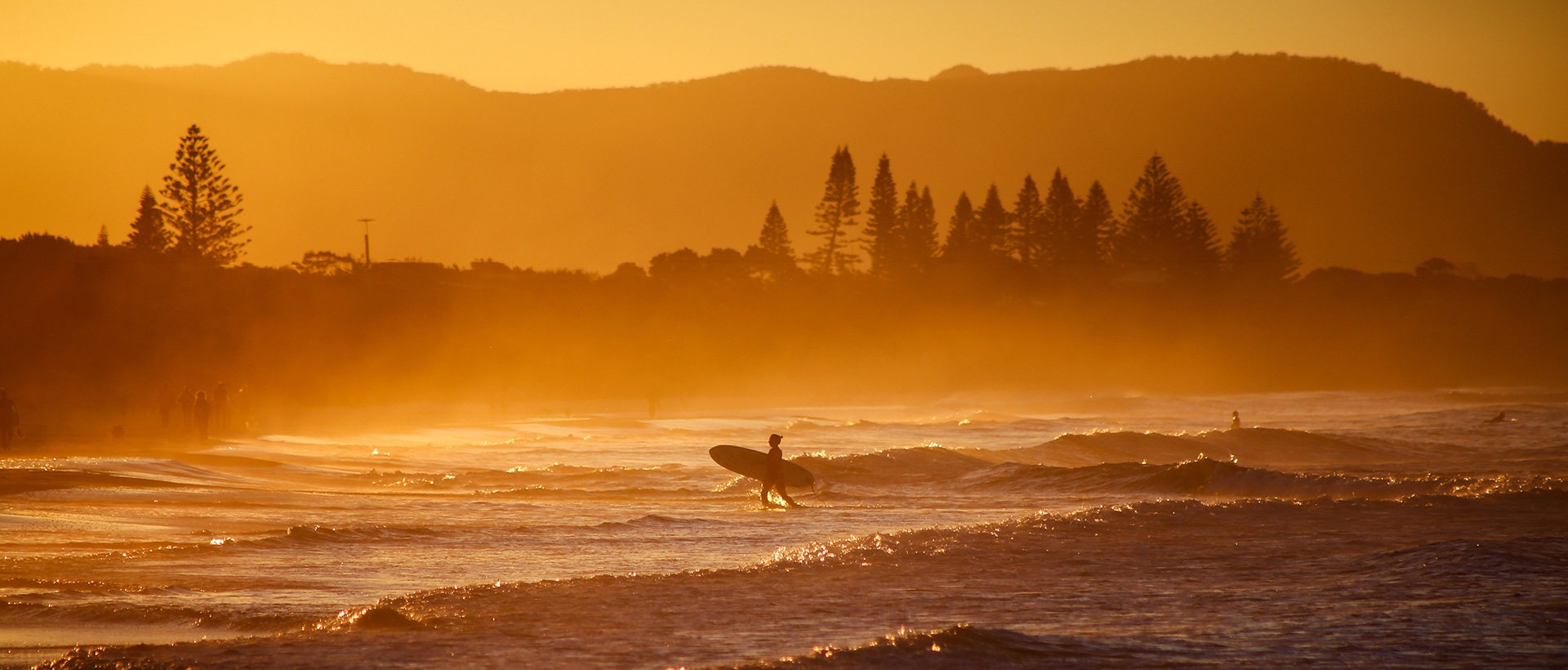
Further north, Byron Bay is also at its best in the hot summer weather. Famous for surfing and a laid-back bohemian way of life, this beachside town will charm you. Go kayaking with dolphins, explore the cool boutiques, and watch the surf pros dance around the waves. As the sun goes down beneath the horizon, grab a cold drink on the beach, then head to one of the glossy eateries for food that looks as good as it tastes.
One of the best times of year to travel to Australia’s Tasmania is between December and February. Spend time in the eclectic capital of Hobart, with many art galleries, and then head up the east coast to Freycinet National Park, out west to Cradle Mountain or the Huon Valley, just 45 minutes south of Hobart, to discover off-the-beaten-track winemakers and golden apple orchards that earned Tasmania its nickname the Apple Isle.
-
March, April, May
Autumn, which spans from March to May, brings milder temperatures and is considered one of the best times to visit Australia. The weather is generally pleasant, with temperatures ranging from 59°F to 72°F. It is a great time for outdoor activities such as hiking, wine tasting, and wildlife spotting. Special events like the Melbourne Food and Wine Festival and the Vivid Sydney celebrate Australia's culinary and artistic prowess, drawing visitors from all corners.
Along with this season bringing gastronomic delights to the wine regions, the weather in Australia in March and April is excellent for hiking through their picturesque trails, enjoying scenic drives and watching some of the best sunsets in the world.
-
June, July, August
Winter reveals a cooler, more tranquil side of Australia, marking it the ideal season for exploring its dry northern territories. We’d suggest heading north to learn about aboriginal culture at Uluru and in Kakadu National Park. There, warm temperatures make outdoor adventures, such as a sunrise tour of Uluru or crocodile-spotting in Kakadu, more appealing.
During these months, visitors can also enjoy the unique desert landscapes of the Northern Territory and the tropical allure of Darwin in the Top End without the oppressive heat typical of other seasons. Special events like the Winter Festival in Sydney, featuring outdoor ice-skating rinks and winter markets, add urban charm to the season, showcasing Australian winter's joys in city and outback settings.




- September, October, November
- December, January, February
- March, April, May
- June, July, August
Best Times to Go to Australia for…

Best Time to Visit Australia FAQs
-
Nine nights is the absolute minimum we would suggest travelling to Australia for. With long, in-direct flights, and jet lag to contend with, you need 10-14 days to enjoy a relaxing holiday.
-
The best time to visit Australia's west coast, particularly destinations like Perth, Margaret River, and Ningaloo Reef, is during the Australian spring (September to November) and autumn (March to May). During these months, the weather is generally warm and sunny, plus, the landscape is either in full bloom in spring, or a stunning display of autumn colours. Spring is a fantastic time to swim with whale sharks too, while autumn is lovely for wine tasting in Margaret River.
-
The best time to visit Australia's east coast, for beach life is from December to February. Hot weather is perfect for swimming, surfing and sunbathing, however, this is also the peak tourist season. To avoid the crowds, the best time to travel to Australia is between March and May or September and November when temperatures are between 20˚ C and 30˚ C. For those interested in whale watching, humpback whales migrate along the east coast from May to November, with peak sightings typically occurring from June to October.
-
The best time to travel to Australia and New Zealand will depend on what you’d like to do while there. The winter months – June to August – are best for skiing and snowboarding. Autumn and spring are best for hiking, wine tasting and taking in the culture without large crowds. Meanwhile, summer is best for beach life and surfing, as this is the hottest time of year.
Call us on +852 2829 2000 to start planning
Our team of travel specialists are waiting to help you book your next adventure.